One of the first questions we hear from architects, builders, and building owners is simple: how much does cast stone cost? The honest answer is that it depends on your project — but the more useful answer is that cast stone consistently costs a fraction of natural quarried stone while delivering virtually the same appearance. Here is what actually drives the price.
Why cast stone is more economical than natural stone
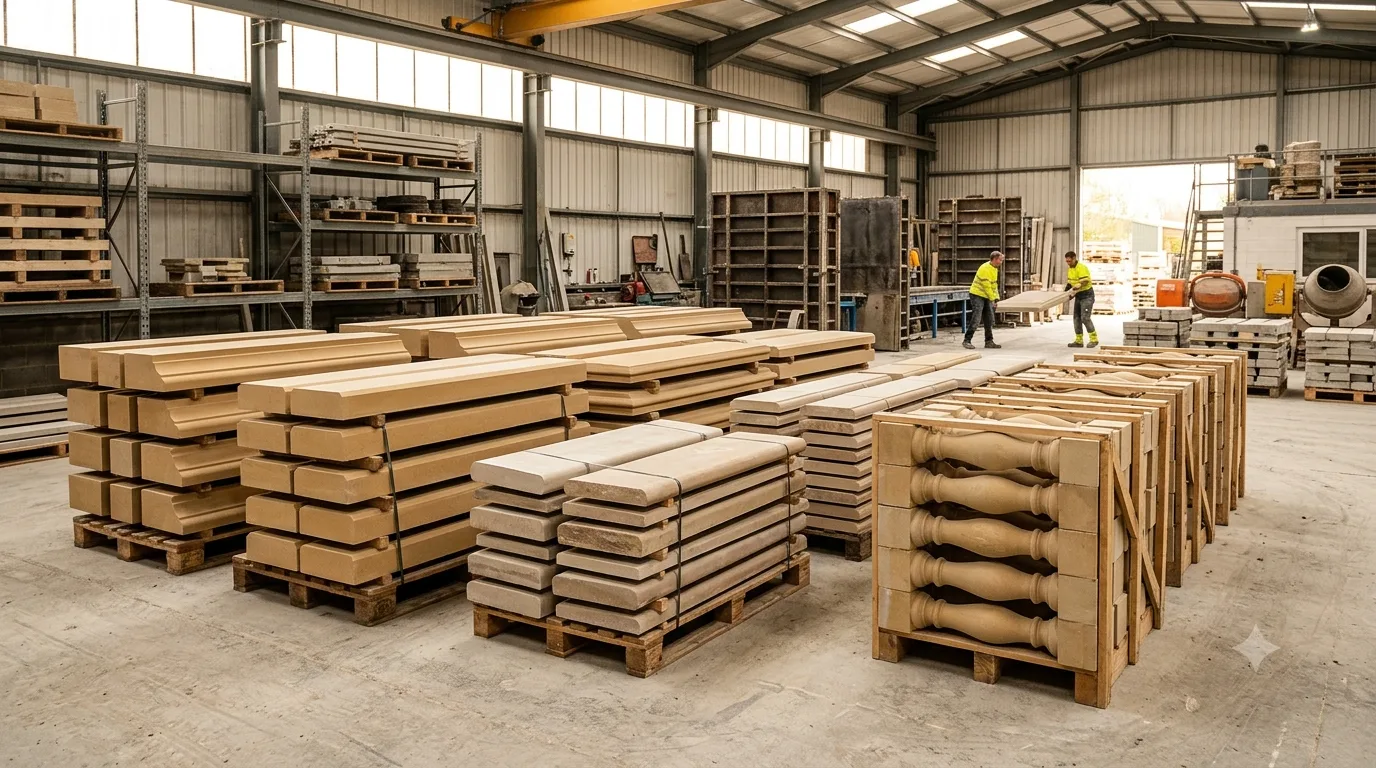
Natural limestone or brownstone has to be quarried, transported, and hand-carved to size — a slow, labor-intensive process. Cast stone is produced from reusable custom molds in a controlled factory, so once the mold exists, each additional piece is far cheaper and more consistent. You get the look of carved limestone without the quarrying and carving premium, plus faster, more predictable installation.
What drives cast stone pricing
- Number of custom molds. The mold is a one-time setup cost. Many identical pieces (e.g., 200 matching coping stones) spread that cost thin; a handful of one-off shapes carry more cost per piece.
- Size and complexity. Large, deep, or heavily detailed elements like balustrades, cornices, and ornate columns take more material and finishing than simple sills.
- Color and finish. Standard grey is the baseline; custom color matching to limestone or brownstone and specialty finishes add cost.
- Quantity. Like most manufacturing, unit cost drops as volume rises.
- Reinforcement and engineering. Structural or load-bearing pieces require steel reinforcement and stamped engineering, which adds to the price.
Cast stone vs. precast vs. natural stone
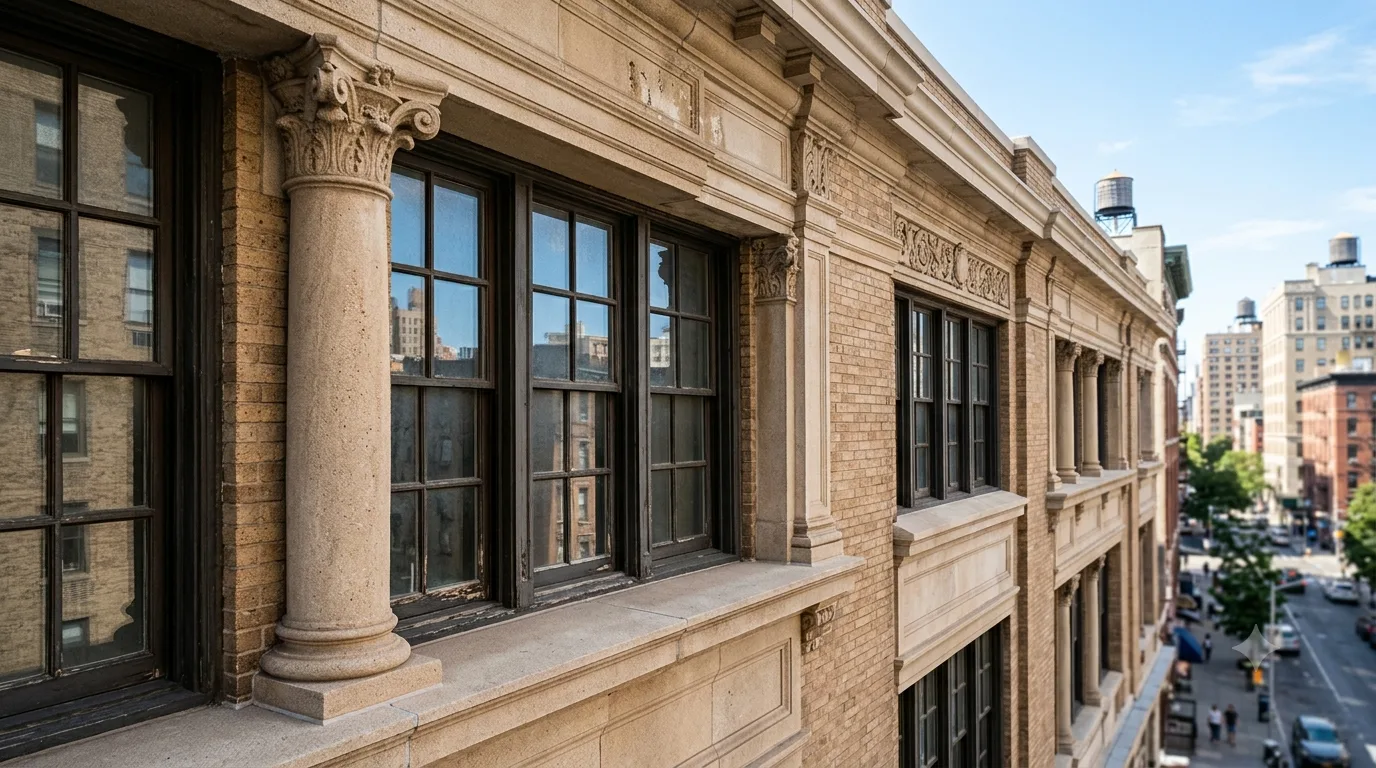
As a rough hierarchy, plain architectural precast concrete is the most economical, cast stone sits in the middle with its finer finish and stone-matched color, and natural quarried stone is by far the most expensive. For most NYC facade work — especially Local Law 11 restoration where you need to match existing limestone — cast stone is the sweet spot of appearance, durability, and budget.
The long-term value
Cast stone is dense and low-permeability, so it resists the freeze-thaw damage and water intrusion that force expensive repairs down the line. A facade detailed correctly in cast stone can last 50+ years, which often makes it the lowest lifetime cost option even when the upfront number is higher than the cheapest alternative.
Get an accurate number for your project
Because pricing depends so heavily on molds, quantity, and detail, the only way to get a real figure is a quote against your drawings. Send us your scope and we'll prepare shop drawings and pricing. Request a cast stone quote to get started.