If you are specifying architectural stonework for a building in New York City, you have almost certainly run into two terms that get used interchangeably: cast stone and precast concrete. They are closely related — both are cast in molds rather than quarried — but they are not the same product, and choosing the right one affects the look, durability, and budget of your project. This guide breaks down the difference in plain language.
The short answer
Cast stone is a specialized, higher-finish type of architectural precast concrete that is engineered specifically to imitate natural cut stone — limestone, brownstone, or sandstone. All cast stone is precast concrete, but not all precast concrete is cast stone. Think of cast stone as the refined, decorative subset of a much broader family of precast products.
What is precast concrete?
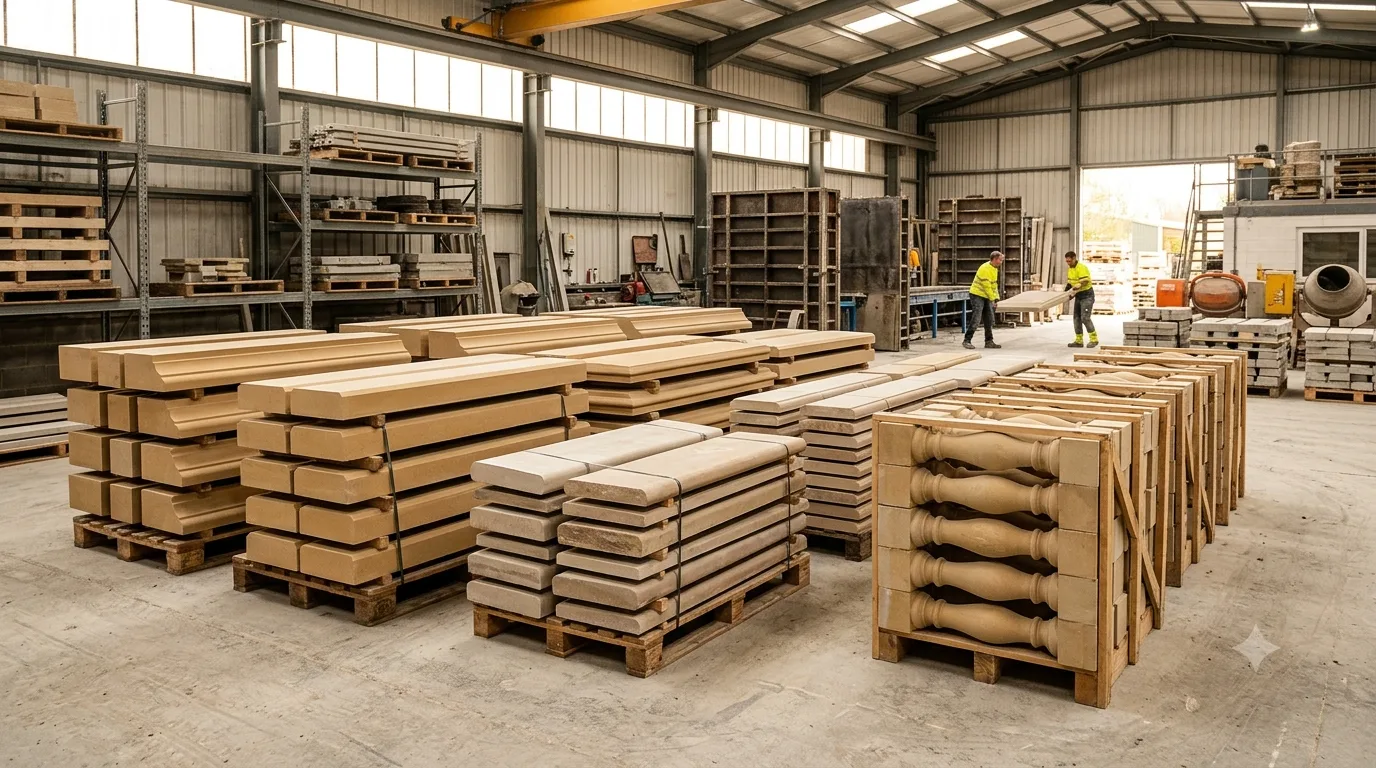
Architectural precast concrete is concrete that is cast and cured in a controlled factory environment, then delivered to the job site ready to install. Because it is produced off-site under consistent conditions, precast offers excellent strength, dimensional accuracy, and durability. It covers a huge range of components — from structural panels, sills, lintels, and coping stones to balustrades, water tables, and decorative trim. Finishes can range from smooth and acid-etched to sandblasted and exposed-aggregate.
What is cast stone?
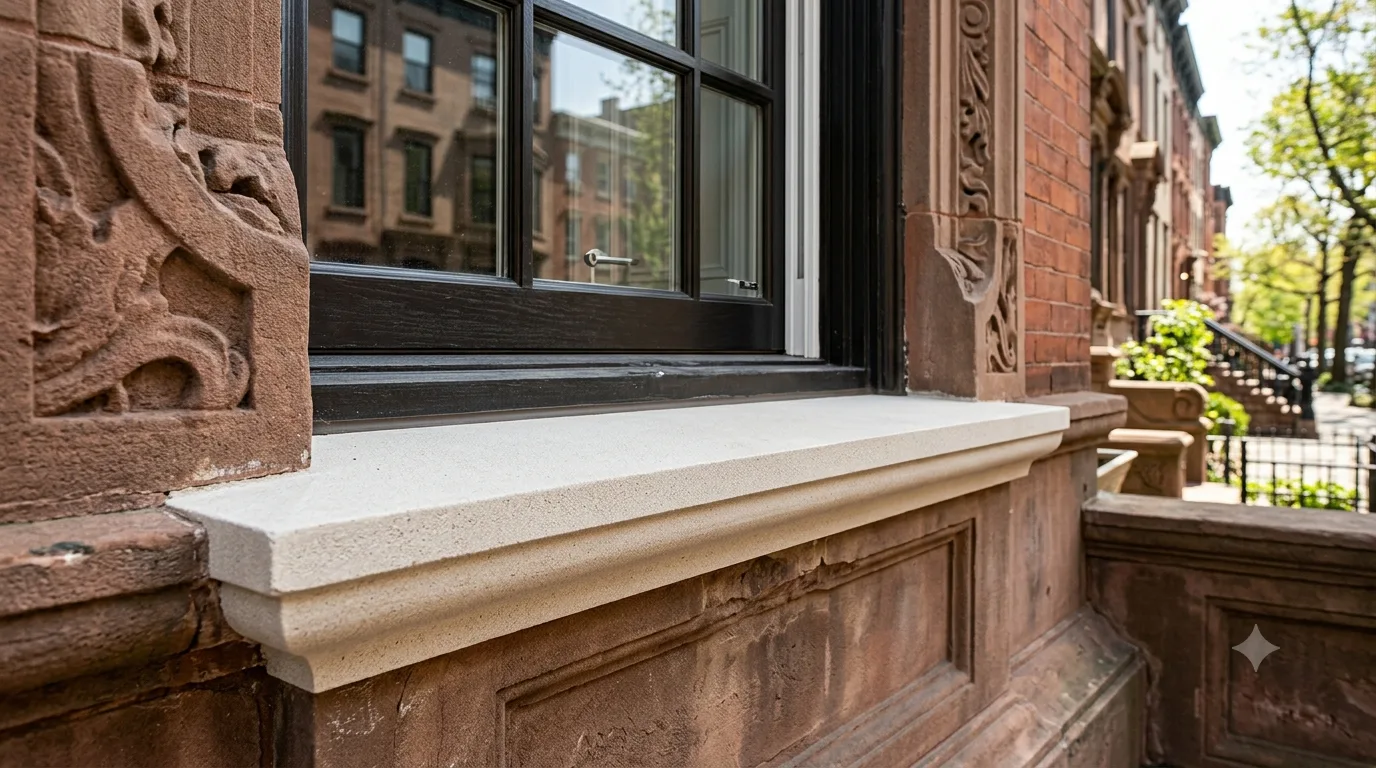
Cast stone is a refined architectural precast concrete made from white or grey cement, carefully graded natural aggregates, and mineral oxide pigments. The mix and the manufacturing process are tuned to reproduce the fine texture and warm color of natural cut limestone. The result is a product that, once installed, is very difficult to tell apart from real quarried stone — at a fraction of the cost and with far greater consistency from piece to piece.
Cast stone vs. precast concrete: side by side
- Appearance. Cast stone is made to look like natural limestone or sandstone, with a fine-grained simulated stone texture. General precast can have many finishes, not all of which imitate stone.
- Materials. Cast stone uses fine aggregates and pigments for a stone-like surface; structural precast often uses coarser aggregate optimized for strength.
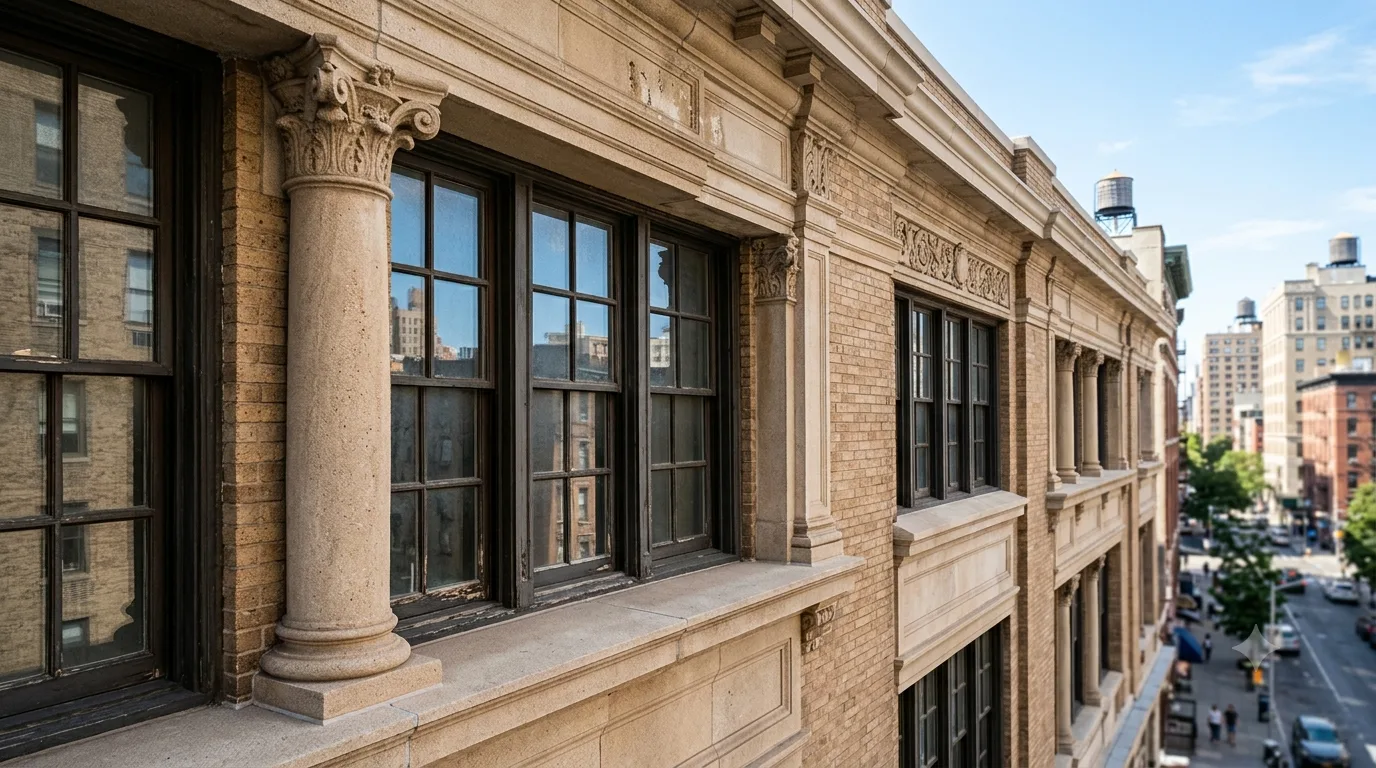
- Typical use. Cast stone is used for decorative facade elements — sills, copings, columns, balustrades, cornices, quoins. Precast covers those plus larger structural and cladding components.
- Cost. Both are far more economical than natural cut stone. Cast stone carries a modest premium over plain precast because of the finer materials and finish work.
- Durability. Both are dense and low-permeability, resisting the freeze-thaw cycling and water intrusion that damage masonry in New York's climate.
Which one is right for your project?
If your priority is replicating the look of natural limestone on a visible facade — especially for a restoration or a landmark building where new pieces must blend with existing stone — cast stone is usually the answer. If you need durable, cost-effective architectural elements where an exact natural-stone match is less critical, standard architectural precast may be the better value. Many NYC projects use both: cast stone for the show faces and precast for everything behind it.
The good news is that you do not have to choose alone. At Mohan's Precast we manufacture both architectural precast concrete and cast stone in our Jamaica, Queens facility, and we color-match either one to your existing masonry. Browse our full product range, read more frequently asked questions, or request a quote and we will help you spec the right material for the job.