Window sills do quiet, important work: they carry water away from the wall below each window. When a sill cracks, spalls, or loses its slope, water starts tracking back into the masonry — staining the facade, rusting lintels, and eventually triggering violations on a Local Law 11 inspection. The durable fix is a properly profiled precast or cast stone window sill. Here is how it works.
Why window sills fail
- Freeze-thaw damage — water gets into porous or cracked stone, freezes, expands, and breaks the sill apart.
- Lost slope or drip edge — a worn or poorly designed sill no longer sheds water away from the wall.
- Failed material — soft natural stone or low-quality concrete simply weathers out over decades.
Why cast stone and precast sills are the right replacement
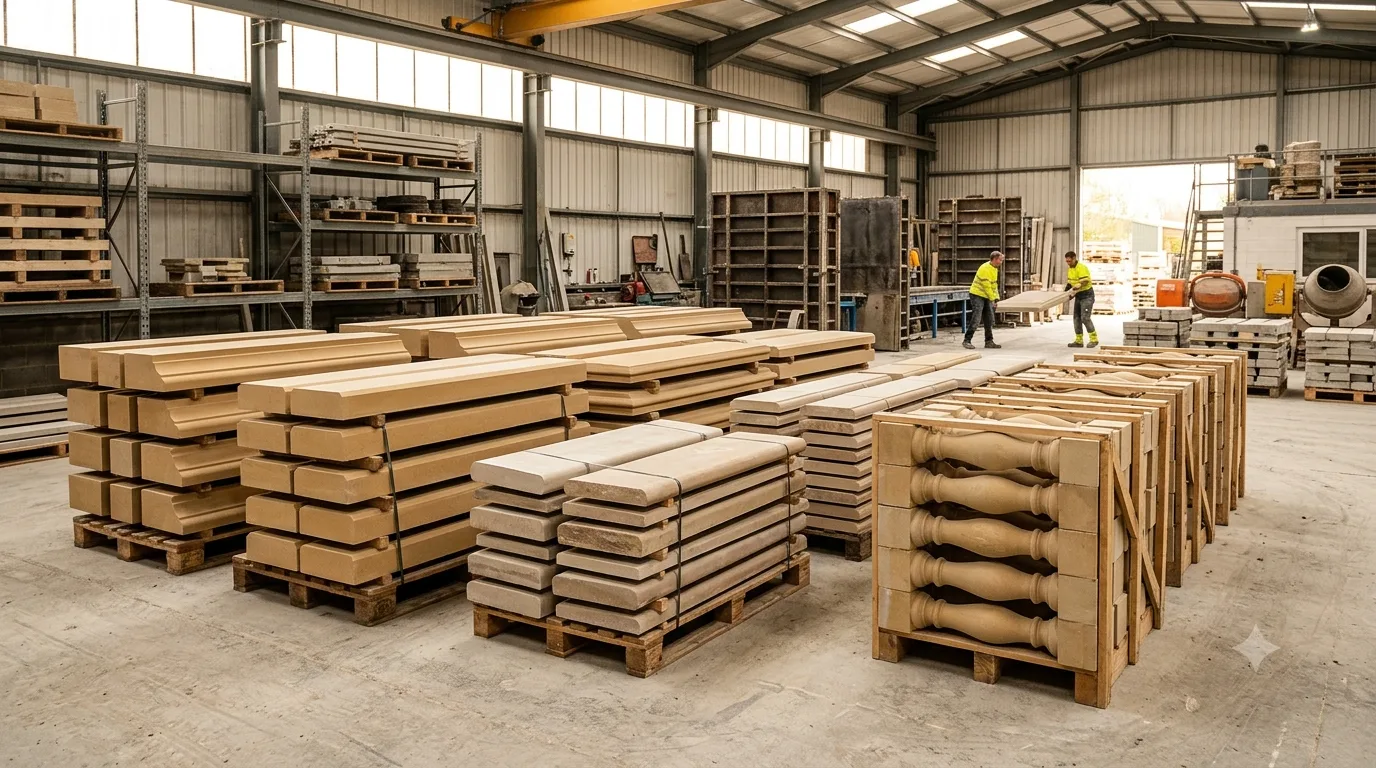
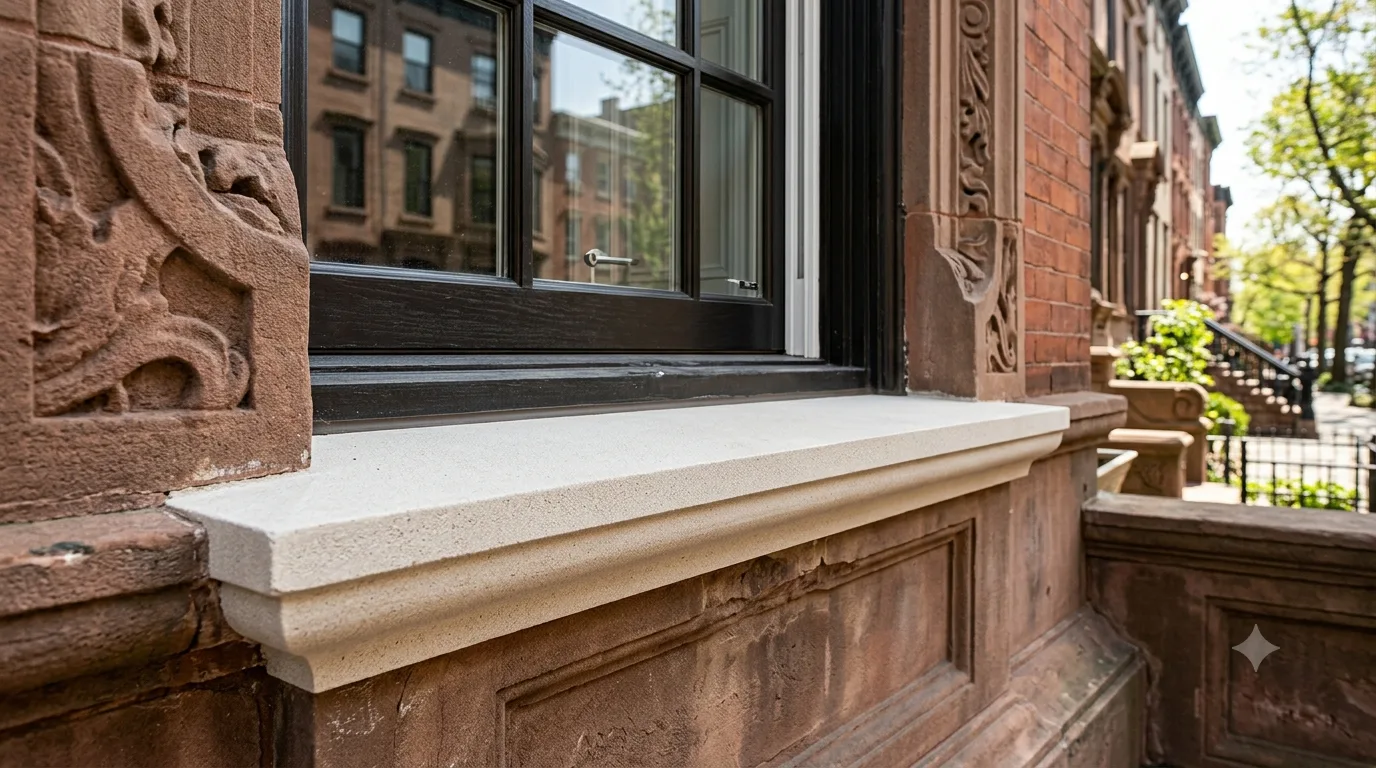
Cast stone sills are cast from custom molds, so we reproduce the exact profile, projection, slope, and drip groove your windows need — and color-match the new sill to limestone, brownstone, or existing concrete. Because cast stone is dense and low-permeability, the replacement resists the water intrusion and freeze-thaw cycling that destroyed the original. For projects where an exact natural-stone match is less critical, durable precast concrete sills are a cost-effective alternative.
Getting the details right
A sill that doesn't shed water is worse than no sill at all. Good replacement sills include adequate slope (wash), end dams or lugs where they meet the jambs, and a drip groove on the underside of the projection so water can't track back to the wall. We detail all of this on shop drawings before fabrication so the new sills fit and perform.
Single sills or a whole building
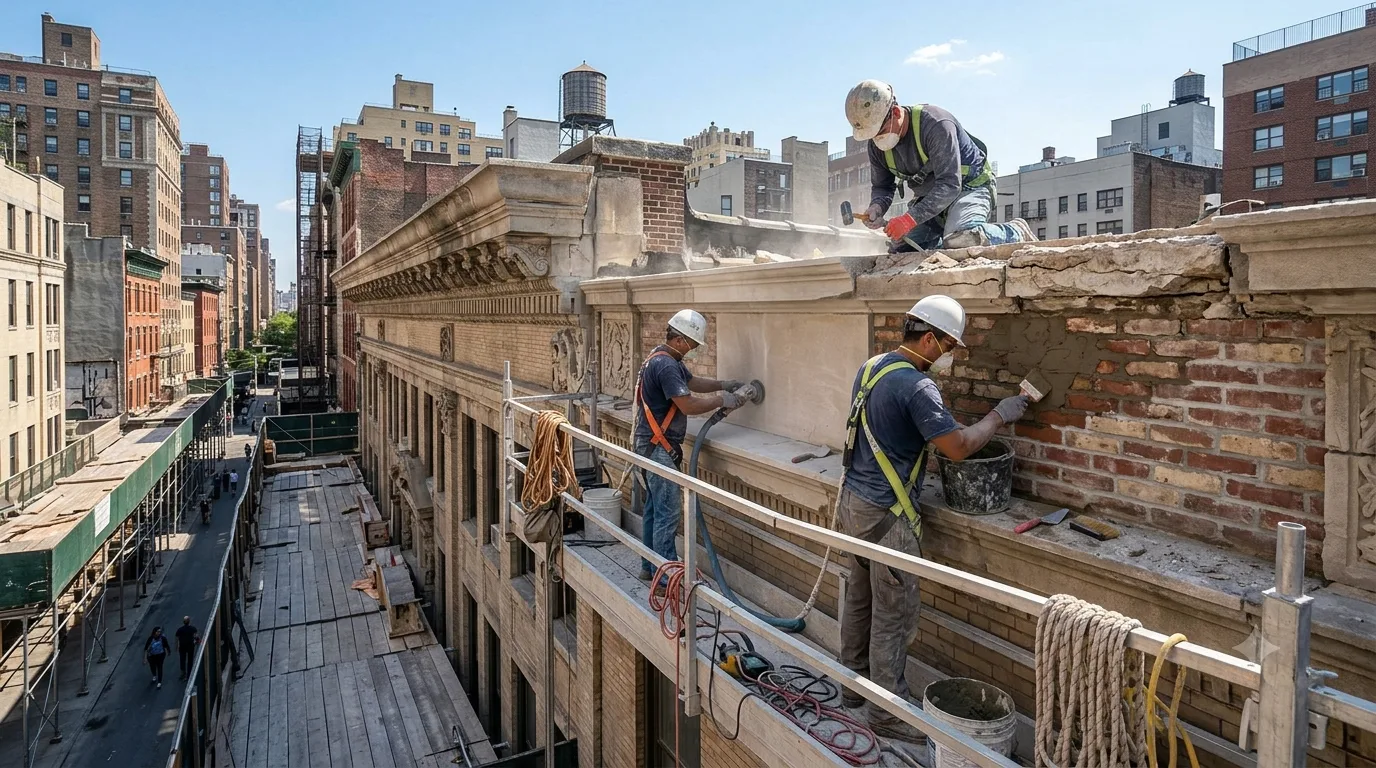
Whether you need one matched replacement sill for a brownstone or hundreds for a multi-building facade restoration, we cast to your exact spec. Many of our NYC sill replacements are part of larger Local Law 11 facade repairs, where coping, lintels, and sills are all replaced together. See more in our FAQ or request a window sill quote.