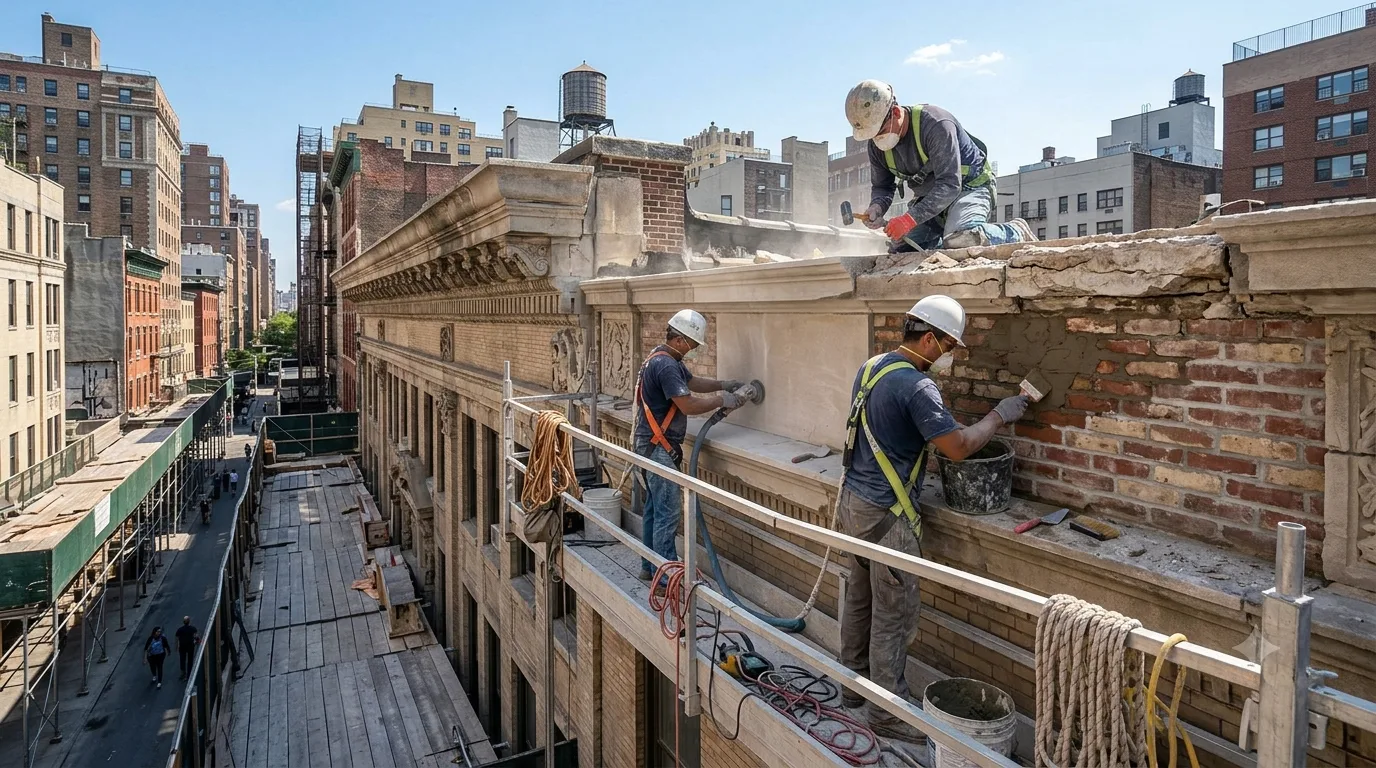
If you own or manage a building taller than six stories in New York City, Local Law 11 is part of your life on a five-year cycle. Officially the Facade Inspection Safety Program (FISP), it is one of the most consequential maintenance obligations a building owner faces — and the repairs it triggers frequently involve replacing deteriorated stonework. This guide explains the essentials and shows how cast stone and precast concrete solve the most common facade conditions.
What Local Law 11 (FISP) actually requires
Every building greater than six stories must have its exterior walls and appurtenances inspected by a Qualified Exterior Wall Inspector (QEWI) once every five years. The inspector files a report with the NYC Department of Buildings classifying the facade as one of three conditions:
- Safe — no repairs required this cycle.
- SWARMP — Safe With a Repair and Maintenance Program; conditions that must be fixed before the next cycle.
- Unsafe — conditions that pose a public hazard and must be repaired within a mandated timeframe, often with a sidewalk shed installed immediately.
Missing a deadline or leaving an "Unsafe" condition unaddressed exposes owners to significant DOB penalties, so it pays to plan repairs early.
The facade elements that get flagged most
FISP inspections repeatedly identify the same culprits — and most of them are stone or masonry elements that have cracked, spalled, shifted, or let water in:
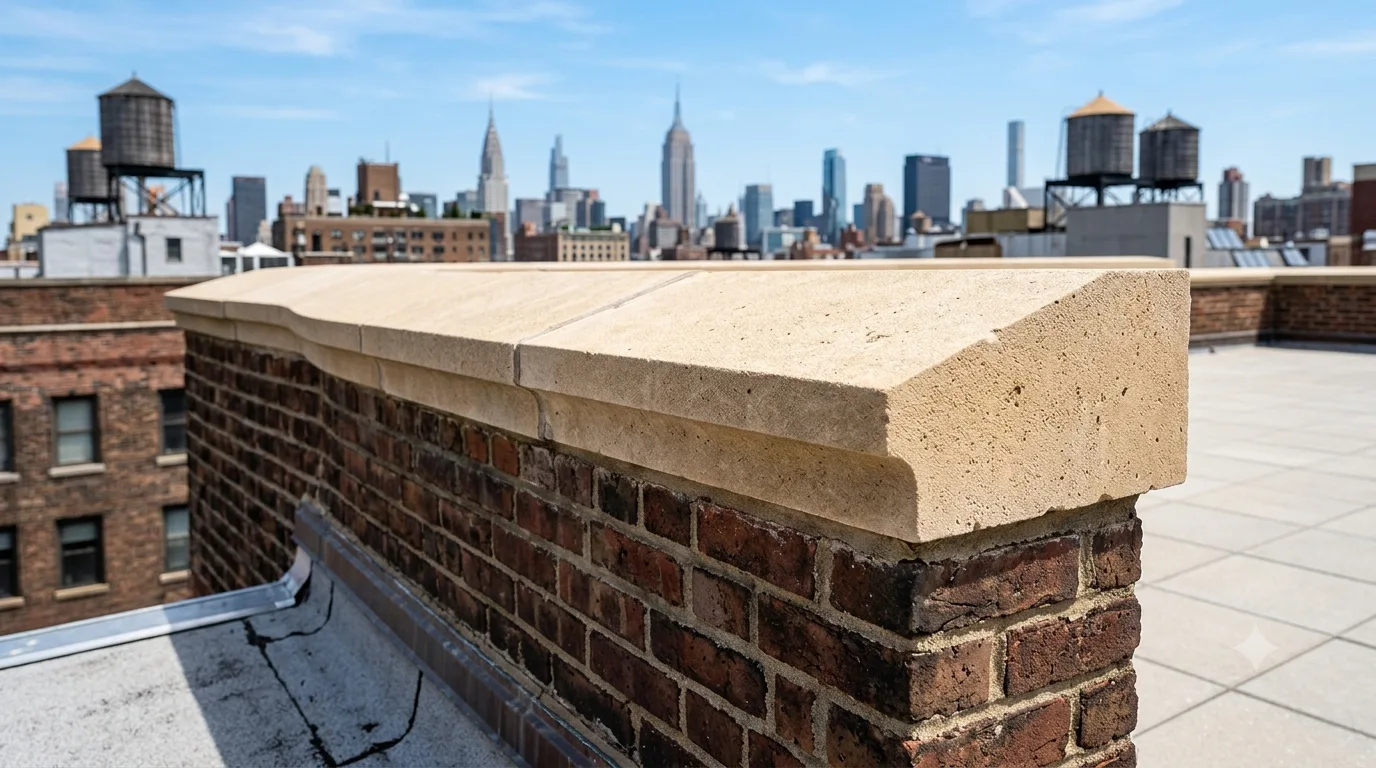
- Parapet coping — the number-one source of water infiltration and unsafe conditions.
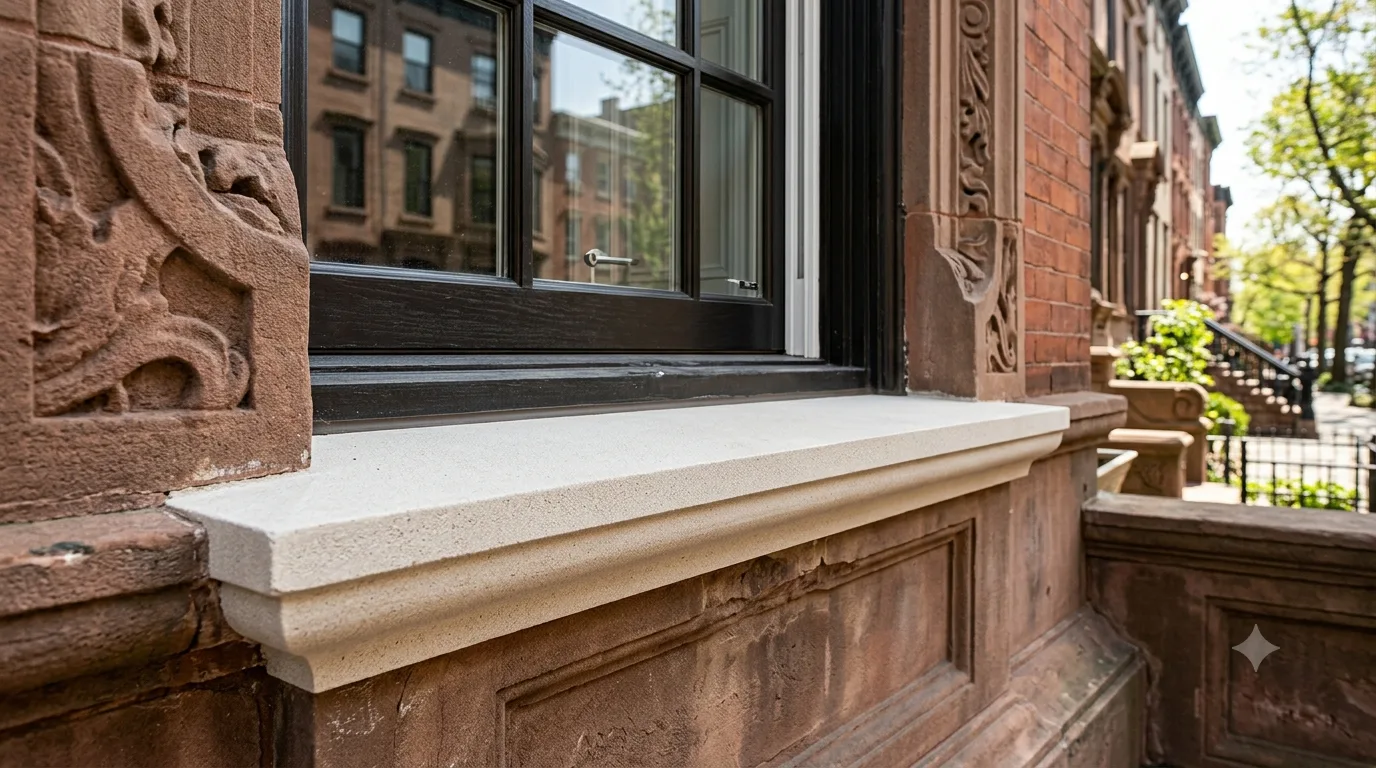
- Window sills — when the slope or drip edge fails, water tracks back into the wall.
- Lintels and keystones over windows and arched openings.
- Water tables, belt courses, and cornices — projecting trim that protects the wall below.
- Balustrades and pier caps on terraces, stoops, and rooftops.
Why cast stone is the ideal repair material
Because cast stone is cast from custom molds, it can reproduce a building's original profiles, dimensions, and color — whether the facade is limestone, brownstone, or sandstone. That makes it possible to replace a single deteriorated coping or sill so the new piece blends seamlessly with the surrounding masonry. Just as important, cast stone is dense and low-permeability, so it resists the water intrusion and freeze-thaw cycling that caused the deterioration in the first place. You are not just passing this FISP cycle — you are building in durability for the next ones.
How the matching process works
A successful facade restoration depends on an exact match. The process starts with your drawings, field dimensions, or a physical sample of the original element. From there we develop shop drawings for your engineer or architect to approve, build the custom molds, color-match the cast stone, and produce the replacement units ready for your restoration contractor to set, anchor, and point.
Plan early — production takes time
FISP repairs are deadline-driven, and custom stone is made to order. Shop drawings are typically issued within about 15 business days, and after approvals, production usually runs 6–10 weeks depending on quantity and the number of molds required. For tight deadlines, ask about our expedited services.
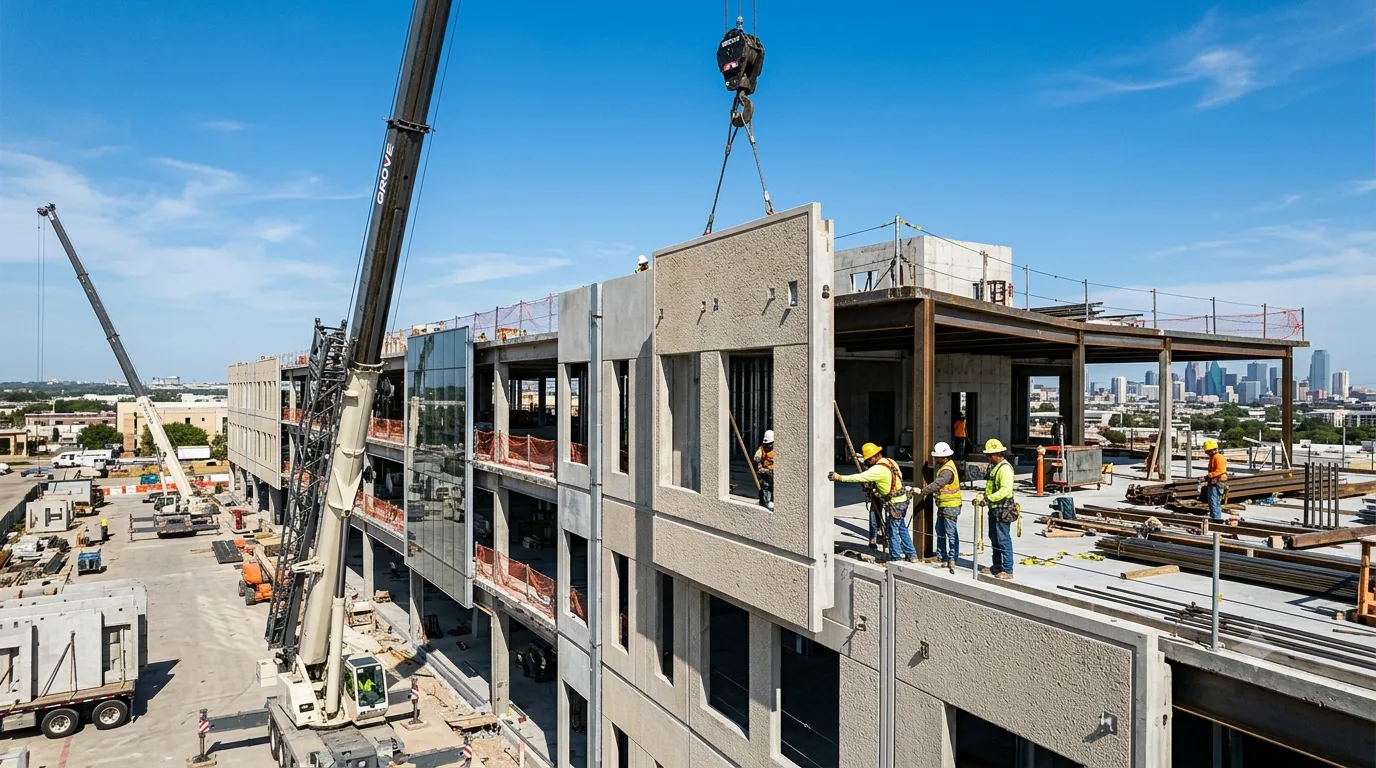
Mohan's Precast is an NYC-approved precast vendor serving all five boroughs. If you have a Local Law 11 deadline, see our dedicated Local Law 11 facade repair page or send us your inspection scope and we will help you plan the matching cast stone and precast replacements.