Cast stone window sills do quiet, essential work: they carry water away from the wall below each window while giving the opening a finished, architectural edge. When a sill cracks or loses its slope, water tracks back into the masonry — which is why properly profiled cast stone sills are a smart specification for any NYC facade.
What a good sill needs
An effective window sill has three features: an adequate slope (wash) to shed water, a drip groove on the underside of the projection so water cannot track back to the wall, and clean end conditions where it meets the jambs.
Common sill profiles
- Lug sill: extends into the masonry on each side; built in as the wall rises.
- Slip sill: fits exactly between the jambs; ideal for replacements because it installs after the opening is built.
- Crown / bullnose sill: decorative front profiles for traditional and brownstone facades.
Sizing and slope
Sills should project beyond the wall face enough to carry water clear, with the slope and drip detail designed for the specific opening. Because every sill is cast from custom molds, the exact width, projection, slope, and drip can be produced to your drawings.
Matching and restoration
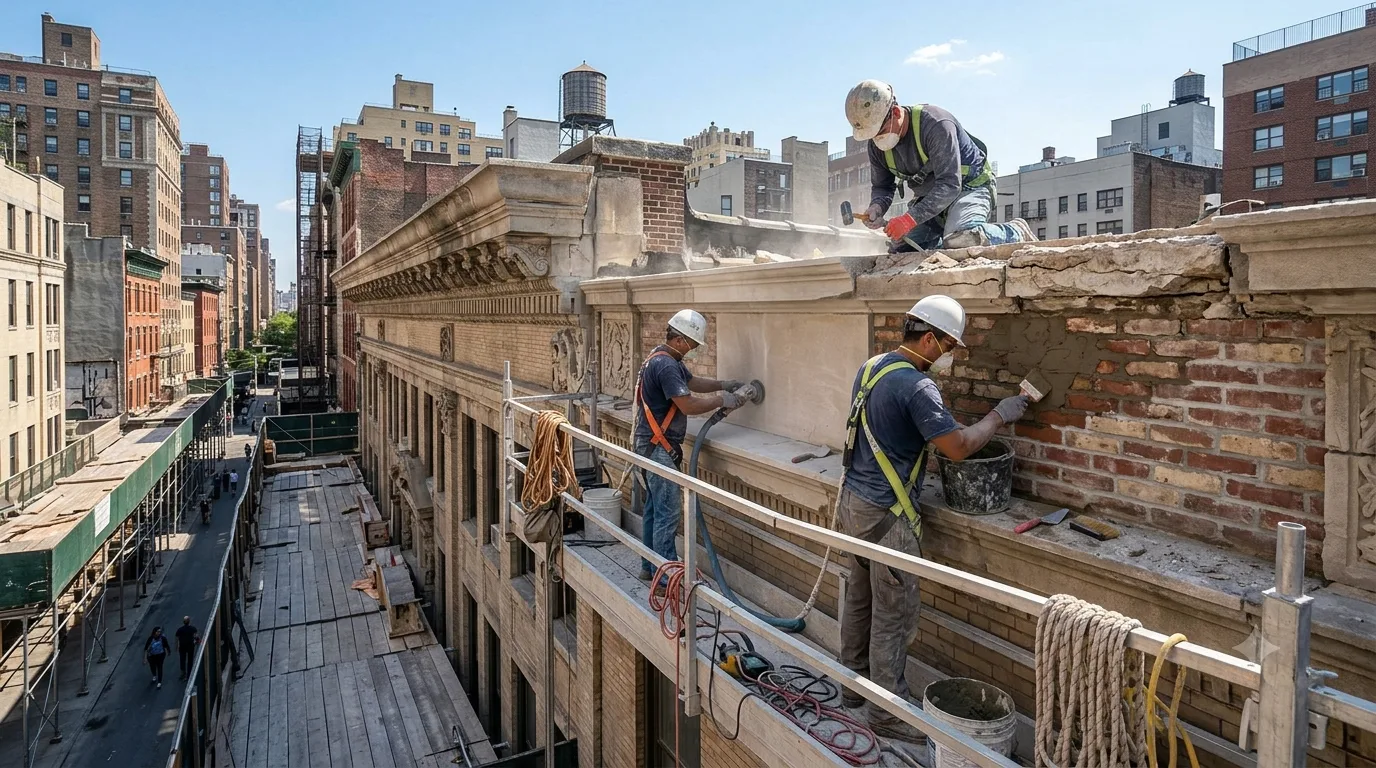
Deteriorated sills are a common finding in Local Law 11 inspections. Cast stone replacements are color-matched to limestone or brownstone and cast to the original profile, so they blend with the facade. See our guide to window sill replacement in NYC for the full process.
Specifying sills
Send us your drawings or a sample and we will prepare shop drawings and a quote. Request a sill quote from Mohan's Precast.