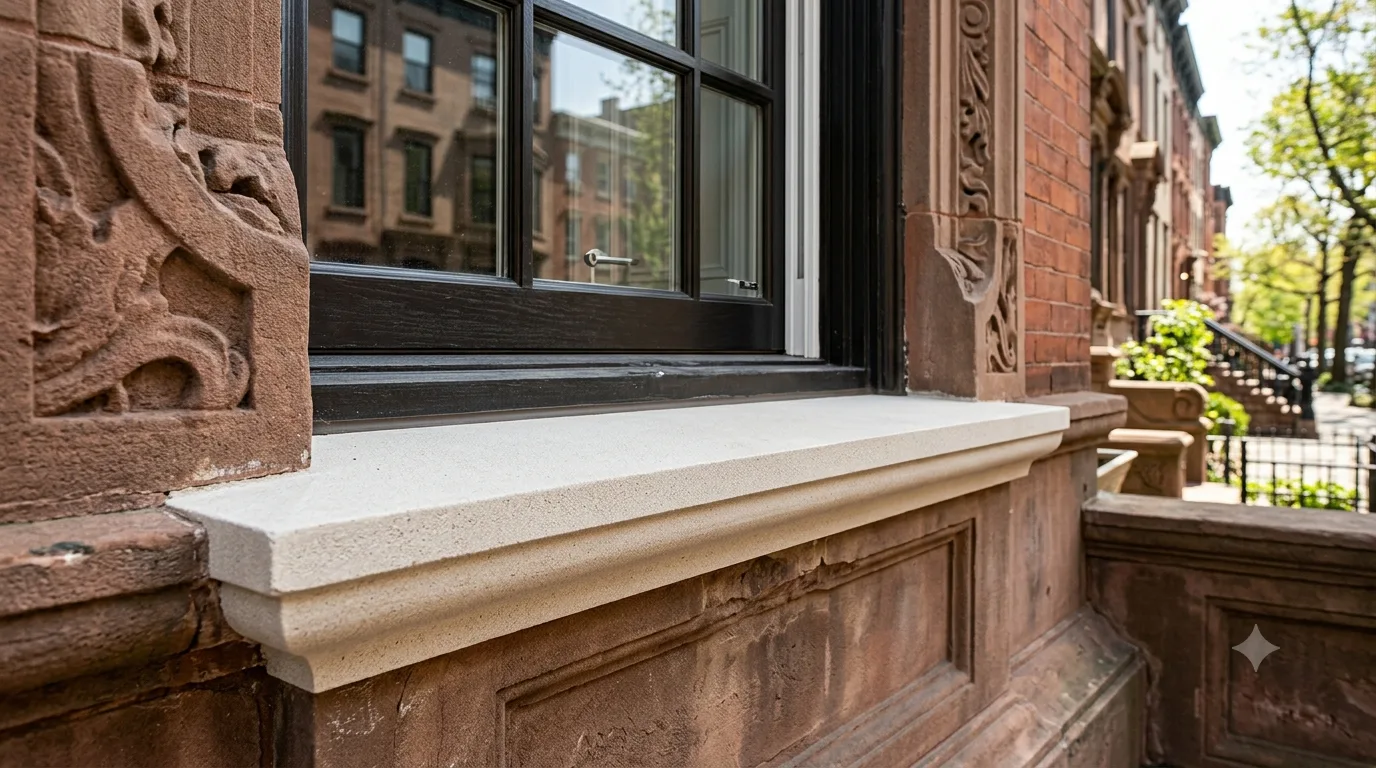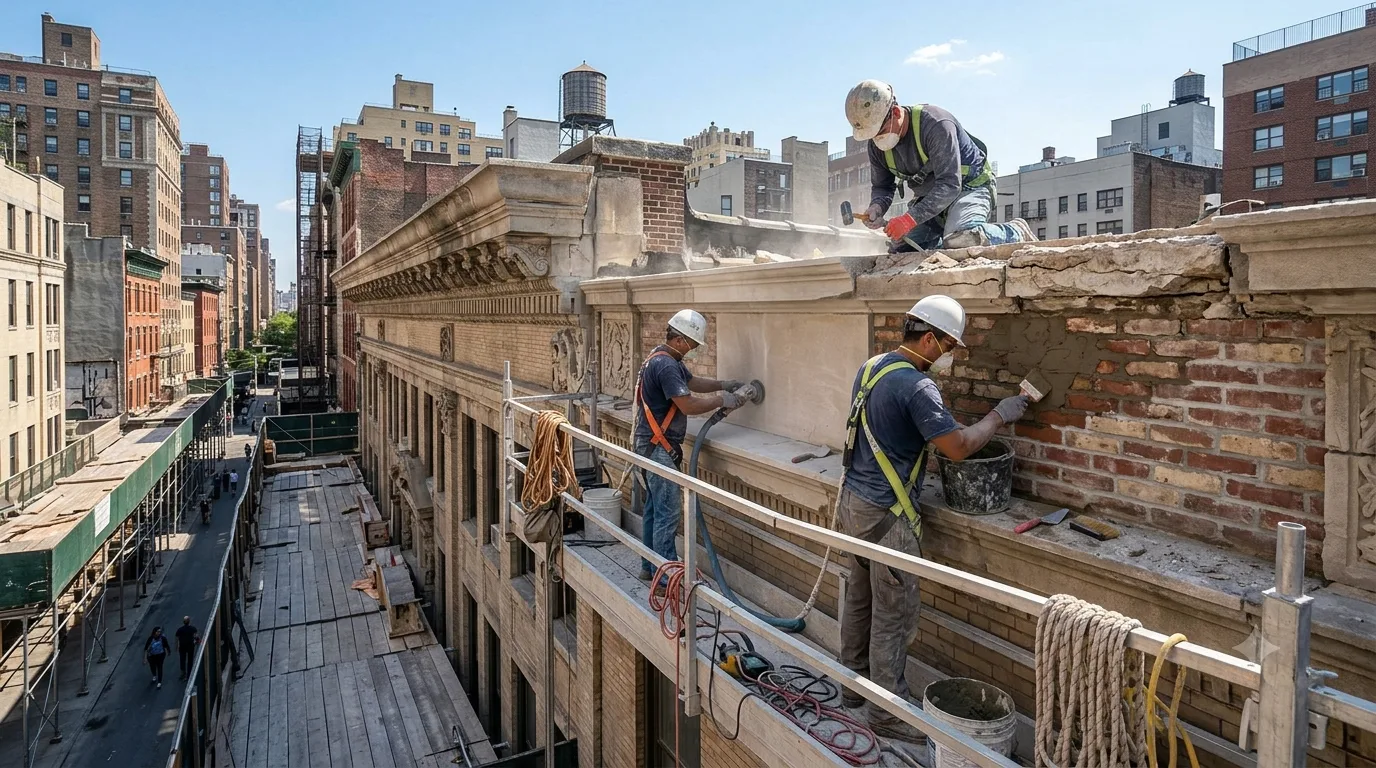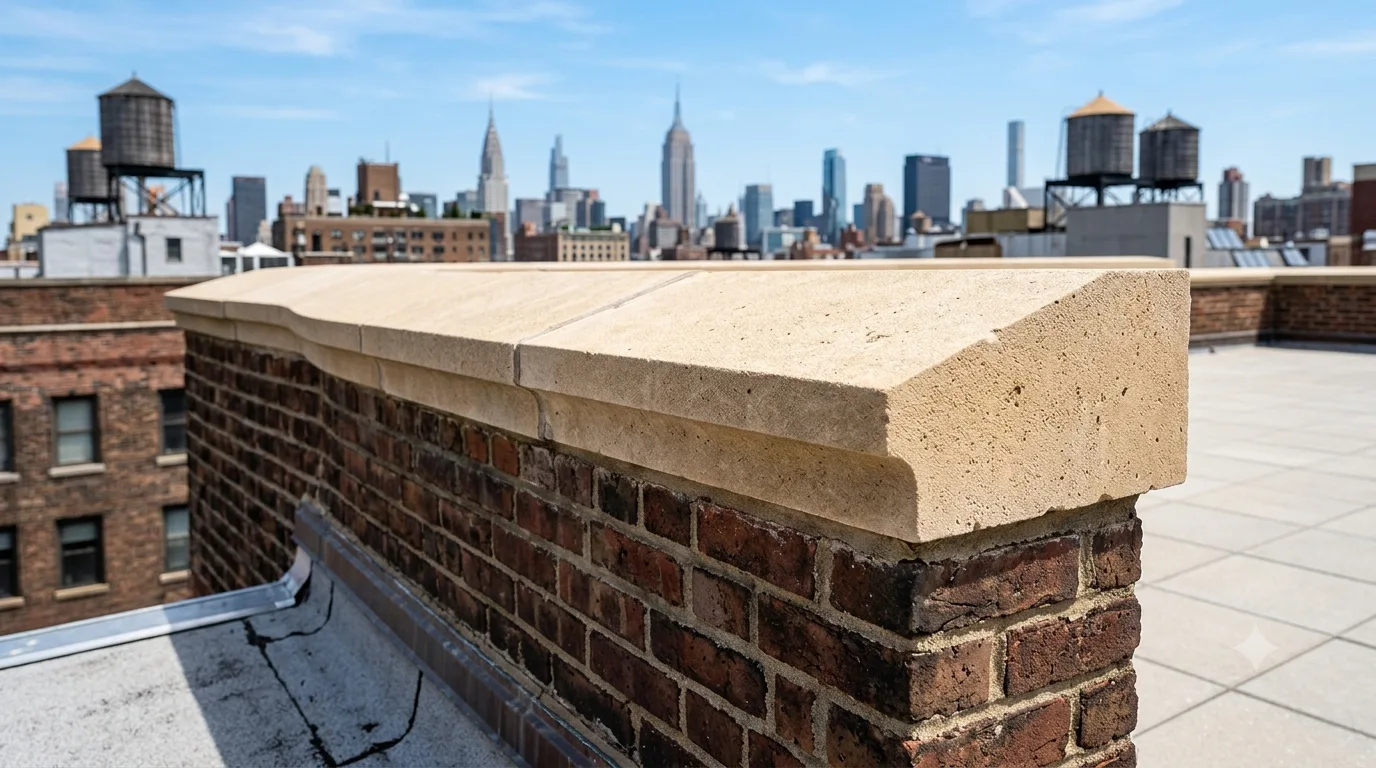
The coping stone is the unsung hero of good masonry. It is the cap that crowns the top of a wall, parapet, pier, or pool surround — and its job is to shed water away from everything beneath it. Choose the wrong coping and you invite staining, cracking, and freeze-thaw damage. Choose the right one and the wall stays dry and looks finished for decades. Here is how to get it right.
What coping actually does
Coping is the first line of defense against water entering the top of a wall. A well-designed coping has a slope (or "wash") and a drip edge that carries rainwater clear of the masonry face rather than letting it run down and soak in. That is why deteriorated coping is one of the most common conditions flagged in NYC Local Law 11 facade inspections — when coping fails, water damage follows quickly.
Step 1: Pick the right material
For most architectural applications you have two strong options, and we manufacture both:
- Cast stone coping — replicates natural limestone for facades, parapets, and landmark restoration where appearance matters.
- Precast concrete coping — durable, cost-effective caps for garden walls, retaining walls, and parapets where a natural-stone match is less critical.
Both are dense and low-permeability, so they stand up to New York's freeze-thaw climate far better than porous alternatives.
Step 2: Choose the profile
Coping profiles are not just aesthetic — they control how water leaves the wall. Common options include:
- Flat / square — clean, modern look; usually pitched slightly to one side.
- Bullnose — a rounded front edge, common on traditional walls and pool surrounds.
- Saddle (double-pitch) — slopes to both sides, ideal for freestanding garden walls.
- Chamfered — angled edges for a crisp architectural profile.
Whatever the look, make sure the design includes an adequate overhang and drip groove so water cannot track back under the stone.
Step 3: Get the dimensions right
Coping should be wider than the wall it caps, with the overhang and drip on the exposed face (or both faces for a freestanding wall). For parapets, the coping must fully cover the wall thickness plus any insulation or membrane upturn. Because every coping run we make is cast from custom molds, we can produce the exact width, slope, overhang, and drip detail your wall requires — including curved and radius coping for bay windows and rooftop bulkheads.
A note on pool coping
Pool coping has extra demands: it should be comfortable underfoot, slip-considered, and resistant to constant water exposure and pool chemicals. We supply durable precast and cast stone pool coping in multiple profiles, colors, and finishes engineered for year-round performance.
Get matched coping for your project
Whether you need a single replacement coping for a Local Law 11 repair or a full run for a new wall, we color-match to your existing stone and cast to your exact profile. Read more in our FAQ, see the coping stone page, or request a coping quote to get started.